What Is a Vendor Management System (VMS)? | The Complete Guide | Conexis VMS
Vendor Management System (VMS) Definition:
A Vendor Management System (VMS) is a cloud-based software platform used to source, manage, pay, and analyze contingent workers and staffing vendors. It centralizes workforce data, automates workflows, improves compliance, and provides real-time visibility into labor spend.
What is a Vendor Management System? Definition, Benefits & Costs | The Complete Guide | Conexis VMS
What is a Vendor Management System (VMS)?
A Vendor Management System (VMS) is a cloud-based software platform that helps organizations source, manage, pay, and analyze contingent workers and staffing vendors in one centralized system. A VMS provides real-time visibility into workforce spend, compliance, supplier performance, and labor costs while automating manual processes across the contingent workforce lifecycle.
Organizations use a Vendor Management System to manage contingent workers, including contractors, temporary staff, consultants, and shift-based labor. By acting as the system of record, a VMS replaces spreadsheets, email chains, and disconnected tools with structured workflows that improve efficiency, reduce risk, and control costs.
What does a Vendor Management System do?
A Vendor Management System centralizes every stage of contingent workforce management, from requisition to payment. Instead of managing vendors, workers, time, and invoices across multiple systems, a VMS brings everything together in a single platform.
With a VMS, organizations can:
-
Create and approve job requisitions
-
Source workers through staffing agencies or direct channels
-
Onboard workers and track compliance documentation
-
Capture time, expenses, and work shifts
-
Automate invoicing and payments
-
Monitor vendor performance and labor spend
-
Generate real-time workforce analytics and reports
By standardizing and automating these processes, a VMS reduces administrative effort, improves data accuracy, and gives stakeholders clear visibility into their extended workforce.
How Does a Vendor Management System Work?
A Vendor Management System connects all participants in a contingent workforce program - hiring managers, staffing vendors, managed service providers (MSPs), finance teams, and workers - within a shared platform.
Here’s how a typical VMS workflow works:
1 - A hiring manager submits a job requisition through the VMS
2 - The requisition is approved based on predefined workflows
3 - Staffing vendors submit candidates directly in the system
4 - Workers are onboarded with automated compliance checks
5 - Time, expenses, or shifts are captured and approved
6 - Invoices are generated and processed automatically
7 - Real-time dashboards track spend, performance, and compliance
Because the Vendor Management System serves as the system of record, all data is captured in one place, enabling accurate reporting, stronger governance, and better workforce decision-making.
Why Is a Vendor Management System Important?
The contingent workforce now represents a significant and growing portion of the global labor market. Yet many organizations still rely on manual tools such as Excel, email, or SharePoint to manage this complex environment.
Without a VMS, organizations often face:
-
Limited visibility into workforce spend
-
Compliance and worker misclassification risks
-
Inconsistent vendor performance
-
Slower time-to-hire
-
Higher labor and administrative costs
A Vendor Management System addresses these challenges by providing automation, transparency, and control, enabling HR, procurement, and finance teams to manage contingent labor strategically instead of reactively.

Key Features of a Vendor Management System
Most modern Vendor Management Systems include:
-
Requisition and approval workflows
-
Vendor and supplier management
-
Worker onboarding and compliance tracking
-
Time, expense, and shift-based tracking
-
Invoicing and payment automation
-
Cost controls and rate management
-
Real-time analytics and reporting
-
Integrations with HRIS, ERP, and payroll systems
Together, these features help organizations scale their contingent workforce programs efficiently while maintaining compliance and cost control.
Key Benefits of a Vendor Management System
A modern VMS delivers measurable ROI. Here’s how:
1. Improved Efficiency - Automation of onboarding, time entry, and approvals saves countless hours while reducing administrative overhead.
2. Full Visibility - All data lives in one platform, enabling clear insight into worker performance, vendor spend, and compliance.
3. Vendor Consolidation- Centralizing vendors enables better performance tracking and smarter sourcing decisions.
4. Cost Savings - By eliminating rogue spend, improving rate management, and optimizing vendor usage, companies can save up to 20% on contingent workforce costs.
5. Risk Reduction - A VMS ensures workers are classified correctly, credentials are up-to-date, and contracts meet compliance standards.
Modern vs Legacy VMS
For organizations managing a contingent workforce, the choice of Vendor Management System (VMS) can define how effectively they attract talent, control costs, and scale operations. Yet, too many businesses remain stuck with Legacy VMS providers.
Legacy VMS platforms: are platforms built decades ago, patched over time, and unable to keep pace with today’s speed of work.
Modern VMS platforms, by contrast, are designed for flexibility, user experience, and rapid integration. The difference between a legacy provider and a modern solution isn’t just about technology, it’s about business outcomes.
If your organization is still operating on a legacy VMS, the consequences go beyond clunky software - they directly impact your bottom line, workforce agility, and competitive edge.
Here’s how a Legacy VMS can impact you negatively:
-
Higher Costs: Legacy platforms often require ongoing customization, manual workarounds, and extra support fees that drive up your total cost of ownership.
-
Slower Time-to-Hire: Outdated workflows and long approval chains delay the hiring process, leaving critical roles unfilled.
-
Poor Visibility: Without real-time reporting, it’s harder to track spend, monitor supplier performance, or stay compliant with labor regulations.
-
Frustrated Stakeholders: Hiring managers, suppliers, and workers all struggle with complex systems that reduce engagement and adoption.
-
Missed Opportunities: While competitors leverage AI-driven insights and automation, legacy users risk falling behind in workforce strategy and cost control.
By contrast, a modern VMS empowers your business to:
-
Scale faster with flexible, mobile-first workflows
-
Control spend through automation and transparency
-
Engage suppliers and workers with user-friendly tools
-
Unlock strategic insights that drive smarter workforce planning
In other words: moving to a modern VMS isn’t just an IT upgrade - it’s a business decision that directly improves efficiency, cost savings, and agility
Modern vs. Legacy VMS: Quick Comparison
| Feature | Legacy VMS Providers | Modern VMS Platforms |
|---|---|---|
| Architecture | Slow, hard to integrate | Cloud-native, API-first, seamless integrations, fast |
| Implementation | Implement in months - costly customizations, pay for set up | Implement in Weeks, rapid deployment |
| User Experience | Clunky, desktop-first, slow adoption | Mobile-first, intuitive, high adoption |
| Flexibility | One-size-fits-all, expensive to adjust | Configurable workflows, adaptable processes |
| Innovation Speed | Slow updates, high customization fees | Continuous updates, AI-driven features |
| Data & Insights | Limited reporting, siloed data | Real-time dashboards, predictive analytics, free customized reports |
| Cost | High due to maintenance & custom development | Lower with automation & built-in flexibility |
| Business Impact | Delays, higher costs, user frustration | Faster hiring, cost savings, strategic insights |
Related Reading:
What's the Difference Between a Modern and Legacy VMS | Guide
How Much Does a Vendor Management Cost?
Historically, VMS platforms were designed for large enterprises and came with complex pricing.
Today, cloud-based VMS solutions like Conexis VMS offer powerful functionality for mid-market organizations at a fraction of the cost.
When choosing a VMS solution, one of the biggest factors in your decision will be pricing. Here's what you need to know about VMS solution pricing models:
1- The Traditional VMS Pricing Model
Once implemented, VMS providers typically charge a percentage of every dollar that is processed through the Vendor Management System. Depending on spend levels the cost of a VMS could be as low as 35 basis points and go up as high as a full percentage point assessed on spend processed through the system.
2 - Monthly License Fee
Recently, some VMS providers have begun to offer a more traditional monthly license fee which is tied more to the data processing costs (which when you think about it aligns more with the VMS’ cost structure). These license fees start as low as a few hundred dollars and can go into the millions per year depending on the scale and complexity of the processing required.
Tip: Be Aware of Hidden Costs
Processing and implementation aside - there are many hidden costs that you might not be aware of. When evaluating VMS providers, be sure to ask these about these potential hidden costs. You can also find a list of specific questions to ask in our free VMS Buyer's Guide.
Here's a rundown of some potential hidden costs
1- Integration Complexity
VMS solutions must integrate with existing systems such as HRIS, ERP, and procurement software. If the integration is complex, it can lead to significant costs in time and resources. Be sure to ask the VMS if they have an open or closed API. An open API will be more cost-effective and give you control over the integration.
2 - Change Management
Employee resistance to new systems can be costly. Effective change management requires training and possibly even shifts in company culture, which can be resource intensive. Find out from the VMS how they handle and support your change curve.
3 - Customization
Solutions may not fit your company’s unique processes. Customizations can be expensive and time-consuming and may require ongoing maintenance. Find out from the VMS how they handle and charge for customization.
4 - Data Migration
Transferring data from old systems to a new VMS can be a hidden cost, particularly if the data needs to be cleaned up or converted to a new format. Find out from the VMS if there are any costs for this.
5 - Compliance and Security
Ensuring the VMS complies with labor laws, data privacy regulations, and industry-specific compliance standards can incur costs, particularly if you operate in multiple jurisdictions. Find out from the VMS what data privacy legislation they follow. GDPR is the gold standard.
6 - User Training
Staff will need training on the new system. This training can be costly, especially if the VMS is complex or if there is high turnover in the staff using it. Find out from the VMS if they charge for training, if its included or if they can train the trainer so you can conduct your own training.
7 - Ongoing Support and Maintenance
Monthly or annual subscriptions, support contracts, and updates for the VMS can add up over time. Find out from your VMS if they charge for updates or any other items as part of your subscription.
8 - Vendor Lock-in
If the VMS is not interoperable with other systems or data formats, it may lead to vendor lock-in, which can be costly if you decide to switch providers in the future. Your VMS should provide an open API ensuring easy migrations.
9 - Scalability
If your contingent workforce grows, the VMS must scale accordingly. Some VMS providers charge more as you scale up, which can be a hidden cost. Find out from your VMS what their back-end architecture is. The most advanced today is a micro server architecture which scales instantly providing a fast user experience regardless of the load being put on the system.
10 - Reporting and Analytics
Most VMS' have a set of standard reports and a way for you to generate your own reporting. However, some VMS' charge a cost to set up metrics and analytics to measure the performance of your contingent workforce through the VMS. Find out if there are any extra costs for the specific reporting and analytics that your business needs.
How Do I Know I Need a VMS?
Are you facing any of these business challenges?
15 Questions to Ask Yourself to Know if you Need a Vendor Management System
I am managing over 15 vendors
A Vendor Management System (VMS) is beneficial when you handle many vendors, have a small team, and frequently manage vendor activities. Typically, this applies if you work with over 25 vendors or are always bringing in new ones.
How a VMS Can Help: As your business grows and you partner with more vendors, managing them all can quickly become overwhelming. This not only wastes your time and resources but also increases the risk of costly mistakes that could hurt your profits. Using outdated methods can lead to inefficiency and inaccuracy, making it hard to stay competitive in today's fast-paced market.
I am managing my workers and vendors manually with spreadsheets
Manual spreadsheets are inefficient and time-consuming, resulting in human error, fragmented processes and inconsistent hiring/vendor decisions that lead to a complete lack of visibility into your contingent workforce program and vendor performance.
How a VMS Can Help: A vendor management system will automate all of these processes and consolidate your data, giving you complete visibility into how your program is performing.
Read more at The Dangers of Using Manual Spreadsheets
I am managing over $2MM in spend
Implementing a Vendor Management System (VMS) becomes crucial when managing a contingent workforce with expenditures exceeding $2 million.
How a VMS Can Help: A VMS streamlines processes, enhances efficiency, and provides comprehensive oversight, ensuring that every dollar spent is optimized for maximum return. By leveraging a VMS, businesses can gain valuable insights into their workforce operations, reduce risks, and make informed decisions that drive growth and success.
I am managing different types of contingent workers
When your contingent workforce is composed of a diverse array of workers, such as contractors, freelancers, and temporary staff, managing them efficiently can become a complex task.
How a VMS Can Help: This is where a Vendor Management System (VMS) becomes invaluable. A VMS is designed to simplify and optimize the management process across these varied categories of workers, ensuring that you can handle everything from recruitment to payment with ease and precision. By implementing a VMS, you can enhance productivity, reduce administrative burdens, and ensure that your workforce operations run smoothly and effectively.
My workers are located in various locations
When your vendors are spread across various locations, effectively managing them can become a complex task due to the diverse jurisdictions and labor laws involved. Each region may have its own set of regulations and compliance requirements, making it essential to stay informed and adaptable. This complexity can lead to increased administrative burdens and potential legal challenges if not handled properly.
How a VMS Can Help: A Vendor Management System will help you navigate these differences and ensure that all vendor relationships are managed efficiently and in compliance with local laws.
I don't know how much I am spending on contingent workers
If you find it challenging to monitor and evaluate the expenses associated with your contingent workforce, implementing a Vendor Management System (VMS) can be a game-changer.
How a VMS Can Help: A Vendor Management System is a powerful tool that not only streamlines the tracking process but also empowers you to achieve greater financial oversight and efficiency. By leveraging a VMS, you can optimize your spending, identify cost-saving opportunities, and ultimately enhance your organization's bottom line.
Read more at: Do you know How Much You Are Spending on Contingent Workers?
I don't know if I am spending too much on my contingent workforce
If you're uncertain about whether you're overspending on your contingent workforce program and are unsure of how to cut costs, a Vendor Management System (VMS) can be a transformative solution.
How a VMS Can Help: A Vendor Management System not only helps you pinpoint critical areas for improvement but also empowers you to implement effective cost-saving strategies. By leveraging a VMS, you can gain valuable insights into your spending patterns, streamline your processes, and ultimately achieve significant savings.
I would like to save money on my contingent workforce program
If you're looking for ways to reduce costs associated with your contingent workforce, a Vendor Management System (VMS) can be a game-changer. that could potentially reduce your organization's expenses by an impressive 8% to 15% within the first year.
How a VMS Can Help: By identifying key areas for improvement, a VMS empowers you to implement effective cost-saving strategies The traditional approach of waiting for service providers to supply non-traditional workers can lead to unnecessary expenses. However, a VMS streamlines this process by standardizing contract pricing, lowering rates, and enhancing the quality of workers. It not only offers direct savings by aligning your spending with your budget but also provides valuable insights into workforce expenses.
Additionally, it achieves soft cost savings through efficient processes such as consolidated invoicing, seamless system integrations, and automation, ensuring that your operations are both cost-effective and efficient.
Read more at: How to Save 20% on Your Contingent Workforce Program with a VMS
I'm not sure if my staffing vendors are meeting compliance requirements
Ensuring that your vendors adhere to the necessary laws and regulations can be a daunting task, but a Vendor Management System (VMS) is designed to simplify this process for you.
How a VMS Can Help: By implementing a Vendor Management System, you can not only track compliance, but you can also effectively manage it. A VMS provides you with real-time insights and automated alerts, ensuring that you are always up-to-date with your vendors' compliance status. With a VMS, you can confidently navigate the complexities of regulatory requirements, saving time and reducing risk, while focusing on growing your business.
Read more at Is Your Staffing Agency putting your Company at Risk?
I'm not sure if I am complying with all labor laws
In situations where failing to comply with labor laws or other important regulations might result in serious legal or financial consequences, a Vendor Management System (VMS) serves as a crucial tool to effectively reduce and manage these potential risks.
How a VMS Can Help: By implementing a Vendor Management System, businesses can ensure they are consistently meeting compliance standards, thereby safeguarding themselves against costly penalties and maintaining their reputation in the industry.
Read more at: How to Mitigate Contingent Workforce Compliance Risk
I'm having difficulty tracking vendor performance
If you find it challenging to monitor vendor performance, manage costs effectively, or ensure compliance with industry standards, a Vendor Management System (VMS) can be your ultimate solution.
How a VMS Can Help: By offering centralized visibility and comprehensive reporting, a Vendor Management System empowers you to streamline operations, make informed decisions, and enhance overall efficiency. With all your vendor data in one place, you can easily track performance metrics, control expenses, and maintain compliance, giving you peace of mind and a competitive edge in your business operations.
Read more at: How a VMS Tracks Staffing Agency Performance
I would like more transparency to support my vendor relationships
If you find it challenging to prove the authenticity and credibility of your vendor relationships, a Vendor Management System (VMS) can be an invaluable asset.
How a VMS Can Help: A Vendor management System offers comprehensive documentation and ensures complete transparency, making it easier for you to build trust with stakeholders and streamline your operations. By using a VMS, you can effortlessly track and manage vendor interactions, ensuring that all your partnerships are legitimate and well-documented. This not only enhances your business's reputation but also boosts efficiency and compliance, giving you peace of mind and a competitive edge in the market.
Read more at: Managing Staffing Agencies
I would like to improve vendor performance
When you aim to accurately measure and significantly enhance vendor performance, a Vendor Management System (VMS) becomes an indispensable asset.
How A VMS Helps: A VMS equips you with a comprehensive suite of tools and valuable insights that empower you to make informed decisions. By leveraging the capabilities of a VMS, you can streamline processes, identify areas for improvement, and foster stronger relationships with your vendors, ultimately driving efficiency and success in your operations.
Read more at: How a VMS Measures Key Performance Metrics
Management of our contingent workforce program is shared by different departments
When no single team is responsible for managing your contingent labor, crucial details can easily slip through the cracks, resulting in significant inefficiencies that can impact your bottom line. You may encounter inconsistent labor rates that disrupt your budget, unfavorable contract terms that put your business at a disadvantage, and a lack of transparency into your non-traditional labor expenses, making it difficult to optimize your workforce strategy.
How a VMS Can Help: A Vendor Management System (VMS) provides a comprehensive, centralized platform that empowers your teams to manage your workforce with greater efficiency and precision. It offers real-time visibility into service providers, ensuring they meet your needs promptly and reliably. This enhanced oversight allows you to manage your workforce more effectively, streamline operations, and ultimately drive better business outcomes.
Our business data and documents aren't centralized
In today's fast-paced business environment, safeguarding your data is absolutely crucial. While having a robust information security plan is essential, it alone won't fully protect your valuable documentation unless you implement an effective control process.
How a VMS Helps: This is where a Vendor Management System comes into play, serving as a vital gateway to comprehensive protection of all your data and documentation. By integrating a VMS into your operations, you can ensure that your data is not only secure but also efficiently managed, giving you peace of mind and a competitive edge in the market.
Read more at: How a VMS Provides Visibility and Control of Your Data
How do I Choose the Right Vendor Management System?
When choosing a VMS, consider your company’s specific requirements.
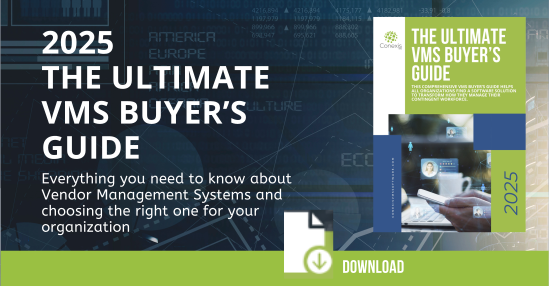
The right VMS helps you streamline vendor management, improve compliance, and reduce costs. But not all systems are created equal. Our free VMS Buyer’s Guide includes expert insights and a step-by-step checklist to help you find the right fit.
Here are just a few things to evaluate when choosing a VMS:
1. Scalability & Flexibility
Choose a solution that grows with your business. Modular, configurable systems allow you to scale features as your workforce needs evolve.
2. Integration Capabilities
Ensure your VMS integrates seamlessly with existing tools like your HRIS, payroll, ERP, or time-tracking systems for maximum efficiency.
3. Real-Time Reporting & Analytics
Look for platforms that offer customizable dashboards, workforce spend insights, and performance tracking to drive smarter decisions.
4. Supplier & Freelancer Management
Your VMS should make it easy to manage staffing agencies and independent contractors, offering automated workflows and communication tools.
5. MSP-Specific Features
If you work with a Managed Service Provider (MSP), look for functionality that supports program flexibility, regulatory compliance, and client success.
Choosing a VMS for a Mid-Market Contingent Workforce Program
For organizations managing a contingent workforce program with an annual spend under $70 million – selecting the right Vendor Management System (VMS) is critical.
- Your VMS should provide a scalable, efficient, and comprehensive solution without requiring multiple systems or extensive customization.
- Yet when it comes to companies transforming how they manage their contingent workforce program, many of the traditional legacy VMS providers have designed their software for large organizations with enterprise-level contingent workforce volumes.
When choosing the best VMS for your mid-market program, ensure that it has been specifically designed and built to meet your needs, and provides you with the flexibility, affordability and customer care you need.
Related Reading:
Frequently Asked Questions
What is a Vendor Management System (VMS)
A Vendor Management System is software that helps businesses manage staffing vendors, contingent workers, and associated processes like invoicing and compliance.
How does a Vendor Management System work?
A VMS centralizes vendor data and automates processes like onboarding, time tracking, and payments to improve efficiency and compliance.
What are the benefits of using a VMS?
Benefits include reduced costs, improved visibility, stronger compliance, and better vendor performance management.
How much does a Vendor Management System cost?
Pricing varies by organization size and needs. Modern VMS platforms like Conexis VMS offer flexible pricing that fits mid-market budgets.
Why choose Conexis VMS?
Conexis VMS offers modern design, fast implementation, and unmatched functionality for all worker categories - at a lower cost than legacy systems.
Learn more about Vendor Management Systems


Risk
How a VMS Reduces Contingent Workforce Risk
Discover how a Vendor Management System reduces contingent workforce risk.

Visibility
How a VMS Increases Contingent Workforce Visibility
Discover how you can gain more visibility into your contingent workforce with a Vendor Management System.

Operational Efficiency
How a VMS Improves Operational Efficiency
Discover how you can improve the operational efficiency in your contingent workforce program with a VMS.
Compliance
How a VMS Tracks Contingent Workforce Compliance
Read how you can track contingent workforce compliance with a VMS.

Measurement
How to Measure Your Contingent Workforce Programs - Key KPIs
Discover how you can measure your contingent workforce program and the key KPIs.

Hiring Performance
How a VMS Improves Contingent Workforce Hiring
Discover the ways that a VMS Improves Contingent Workforce Hiring: Improves Time-To-Fill, Reduces No-Shows, Quality and Retention.
×