Are you trying to choose the best VMS - but not sure where to start?
If you're managing a growing contingent workforce, evaluating your current system, or still relying on spreadsheets and manual processes - you’re not alone.
Choosing a Vendor Management System in 2026 is more complex than ever.
-
Every vendor claims to be “modern”
-
AI is changing expectations
-
And the gap between modern and legacy systems is growing fast
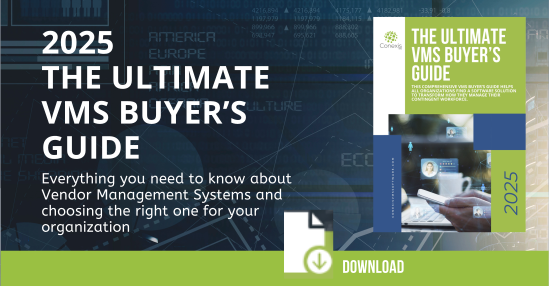
That’s exactly why we've just updated The Ultimate VMS Buyer’s Guide for 2026!
What’s Inside the 2026 VMS Buyer’s Guide
This free guide provides everything you need to confidently evaluate and choose the right VMS:
- What a Vendor Management System actually does
- How much a VMS costs (and hidden fees to watch for)
- The features that actually matter (and what to ignore)
- A step-by-step process for choosing a VMS
- Key questions to ask every vendor
- A comprehensive VMS Buyer’s Checklist
- How to compare providers using objective criteria
Get your Free Copy Today

What’s New in the 2026 Edition
This year’s guide goes deeper into what truly matters when evaluating a VMS today:
✔️ What Defines a Truly Modern VMS in 2026
Not all systems are created equal. Learn how to identify:
- Cloud-native vs legacy architecture
- Open API vs closed systems
- User adoption vs user frustration
✔️ How AI Is Changing Workforce Technology
AI is now shaping:
- Automation
- Decision-making
- Workforce insights
The guide explains what’s real - and what to look for.
✔️ Modern vs Legacy VMS - Clearly Explained
Many companies are still using outdated systems without realizing it.
The guide breaks down:
- Why legacy systems slow you down
- How modern VMS platforms enable speed and flexibility
- What to look for when upgrading
✔️ New Sections for Staffing Agencies & MSPs
Including:
- Tips on choosing the best VMS for Staffing Agencies and for MSPs
- White-label VMS strategies
- How a VMS can help you generate additional revenue
✔️ New Section for Mid-Market Contingent Workforce Programs
Including:
- Tips for choosing the best VMS for Mid-Market Contingent Workforce Programs
- Comprehensive skill category coverage
- Scalability and ease of use
Updated Evaluation Framework
A more advanced checklist that helps you:
- Compare vendors objectively
- Avoid bias and marketing noise
- Make a confident decision
✔️ Expanded “Mistakes to Avoid” Checklist
Avoid common pitfalls like:
- Choosing based on price alone
- Ignoring user adoption
- Overlooking integrations
- Selecting outdated technology
Why Companies Are Re-Evaluating Their VMS in 2026
The way companies manage contingent labor has changed. Many organizations are still using:
- Spreadsheets
- Email-based workflows
- Disconnected tools
- Legacy VMS platforms
But today’s workforce requires:
- Real-time visibility
- Automated processes
- Centralized data
- Scalable systems
As outlined in the 2026 Ultimate VMS Buyer's Guide, a VMS centralizes the entire contingent workforce lifecycle - from requisition to payment - while providing visibility, cost control, and compliance .
The risk isn’t just inefficiency. It’s making decisions without visibility.
Ready to Find the Best VMS for Your Organization?
Download the Free 2026 Ultimate VMS Buyer's Guide today!
Final Thoughts
Choosing a VMS isn’t just a software decision - it’s a strategic one.
The difference between a modern system and a legacy platform can impact:
- Cost
- Efficiency
- Compliance
- User adoption
The 2026 VMS Buyer’s Guide helps you make the right choice - with clarity and confidence.
The Conexis VMS Difference
Conexis VMS is an award-winning vendor management system built for organizations that want the power of enterprise software without the complexity or cost.
Leveraging the latest technology, Conexis VMS delivers the expertise, reliability and security of enterprise systems, while offering the flexibility, user friendliness and tailored, personal service you require. Learn more about our Company and what makes Conexis VMS different.
Discover the Power of Conexis VMS
Conexis VMS is trusted by staffing agencies, MSPs and leading organizations to modernize and manage their contingent workforce programs. Here's why organizations choose Conexis VMS:
-
Modern VMS Technology - Built on the latest AWS microservices architecture and Open API
-
Fast Implementation - Get up and running in under a month, free setup and training included
-
Fully Branded White-Label VMS - Your Logo. Your Domain. Your Branded Communication
-
Flexible Pricing - No setup fees, with free implementation, training and account management
- Personal Attention - Experienced senior account management from implementation onward
Switching Your VMS or Just Getting Started?
We work with teams at every stage, from first-time buyers to companies replacing outdated platforms that can't keep up. Either way, we'll show you what a modern VMS looks like, up and running in under 30 days.
 |
 |
 |



 Read More